· 40 min read · Samuel . E . Zih
E-NDT: Existence, Now, Differentiation, Time
A metaphysical framework built from one rule: take what IS as it is. Matter, space and consciousness have never been observed to arise from anything prior — so all three are defaults. From that, time becomes consciousness's measurement of order, Now becomes individual and graded, and eight natural phenomena follow from the same primitives.
- Metaphysics
- Consciousness
- Time
- E-NDT

E-NDT stands for Existence, Now, Differentiation, Time. It is a metaphysical framework I built from first principles to re-examine the nature of time, change, presence and consciousness — on a small set of foundational commitments, each stated openly rather than smuggled in.
It starts from one rule: take what IS as it is, and add nothing that has not been observed. Everything below — the axioms, the propositions, and the derivations of eight natural phenomena — follows from applying that rule consistently. This is version 3.3, published in full.
Matter, space and consciousness have each been observed. None of them has ever been observed to arise from anything prior. That is the whole foundation.
Preamble
E-NDT is a metaphysical framework. It works at the level beneath prediction: physics tells us how things will measure; E-NDT addresses what existence, time and consciousness are. It is built to be judged on five things:
Coherent interpretation of phenomena.
Phenomenological fit with lived experience.
Internal consistency.
Explicit rather than smuggled metaphysical commitments.
A strict observational baseline for what is taken as primitive.
The framework rests on four substantial commitments, all made explicit:
Consciousness is a default of existence, not derived from matter.
There exist multiple planes of existence that consciousness can engage.
Existence is one totality — all that is and can be is within it.
Identity is intrinsic to consciousness, not added to it.
None of these is arbitrary. Each is grounded in the same observational criterion: what IS, and what has not been observed to differentiate from a prior state.
Scope and method
What E-NDT is
A metaphysical framework re-examining the nature of time, change, presence, consciousness, memory, and the structure of existence.
Where it sits relative to physics
Physics measures; E-NDT interprets. The framework accepts every result physics produces and keeps physics exactly as it is — the calculational tool that works. What E-NDT supplies is the reading of what those measurements are measurements of. Because it accepts the same data, no experiment is set against it; the question it answers sits one level below the one experiments answer.
Working scope
The principles apply to any consciousness with awareness, including non-human animals at lesser degrees. The formal work uses C_h — human consciousness — for tractability. That is a methodological choice, not a claim that consciousness is exclusive to humans.
The observational baseline
E-NDT begins by taking what IS as IS, without adding entities or processes that have not been observed. Three things meet that criterion as defaults:
Matter — observed, never seen to differentiate from a prior state.
Space — observed, never seen to differentiate from a prior state.
Consciousness — directly experienced (we have it), never seen to differentiate from a non-conscious prior state.
The criterion is symmetric. The same standard that establishes matter and space as primitive establishes consciousness as primitive. None of the three has been observed to come from anything else.
Where the burden of proof sits
The burden of proof sits with whoever claims reduction. The claim that “consciousness emerged from matter through evolutionary processes” requires evidence, and that evidence has never been produced — emergence has not been demonstrated experimentally. A claim that has never been shown does not earn priority over what is directly observed. My conclusion, from observation, is that consciousness is default: it is the position closest to what we actually encounter.
Reasoning forward from the defaults
From these defaults the framework reasons by reduction. From “consciousness is an indestructible default” and “consciousness does not come from matter”, it follows that consciousness persists when the body — a specific configuration of matter — dissolves. The conclusion follows validly from the premises, and the premises rest on direct observation together with the absence of any counter-observation.
Primitive notions
These are primitive — undefined, self-evident, taken as given:
Symbol | Meaning |
E | Existence — the absolute, self-evident totality. |
S | Space — a default of existence, present in E. |
M | Matter — a default of existence, present in E. |
C | Consciousness — a default of existence, present in E. (Working scope: C_h, human consciousness.) |
𝔖 | State space — the configuration space of matter. States are primitive; differentiations are derived as transitions between states. |
Pot | Potential function: Pot(m) ⊆ 𝔖 for each m ∈ M — the set of potential states a piece of matter can occupy. Consciousness cannot add to it. |
Ω | The set of all differentiations. |
≺ | A strict partial order on Ω — irreflexive, transitive, antisymmetric. |
Default versus derived
Default means: exists without being differentiated from any prior state. By direct observation, matter, space and consciousness are all defaults. None has ever been observed to arise from a more fundamental prior state.
Derived does not mean unreal. Derived entities — time, speed, measurements, thoughts, concepts — exist as features or contents of defaults. Time, for example, exists in consciousness and is therefore real; it is simply not free-standing the way matter is.
On terminology: earlier versions used “substantial” for defaults. “Default” is the better word, because it names the criterion itself — not differentiated from a prior state — rather than implying a particular theory of substance.
The axioms

Axiom 0 — Non-existence is unprovable
Non-existence (¬E) cannot be proven, because any proof exists within E. The question “what caused E?” is meaningless: causality applies only within E, never to E as a whole.
Formally: the model is closed. All variables, sets and relations are within E. There is no meta-set and no external observer.
Axiom 1 — Existence is self-evident
E = E. There is no external cause. All relations, including causal ones, are internal to E.
Formally: E is the universal class of the framework. It is primitive, not constructed from anything else.
Axiom 2 — Primary existents (defaults)
Space (S), Matter (M) and Consciousness (C) are defaults of existence. None is derived from a prior state. The same observational criterion applies to each: there is no observation of any of them differentiating from something prior.
Formally: S, M, C ⊆ E are primitive (default) subsets. “Default” formally means there is no observed prior state from which they differentiate.
Empirical basis:
Matter — observed; never observed to arise from non-matter.
Space — observed; never observed to arise from non-space.
Consciousness — directly experienced; never observed to arise from non-conscious matter.
All three meet the same criterion. Treating any one of them as derived from another would require evidence that does not exist.
Non-physicalism. Consciousness is not physical in the sense of being matter or a property of matter — it is its own primitive default. Space is not physical in the sense of being matter either, and space is real and substantial.

Axiom 3 — Now (consciousness-relative, graded, multi-modal)
Now is not eternal, and it is not identical with existence. Now is what each particular consciousness assembles in the moment. It varies in strength, varies by mode, and is individual to each consciousness.
Formally: for each C ∈ 𝒞, a Now N_C may obtain with strength s(N_C) ∈ [0, 1]:
s(N_C) > 0if and only if C is conscious and engaged in some observation, outward or inward.s(N_C)scales with C's degree of self-awareness.s(N_C) = 1— full Now — requires full self-awareness.Loss of a sensory channel does not directly reduce
s(N_C)if self-awareness is intact.
Strength. s(N_C) reflects the degree of agency C has over itself and over the artifacts in its current mode of engagement. It is introspectable — C inherently knows how much control it has in a given state — though not externally measurable as a quantity.
Modes (planes) of Now:
Mode | Engagement |
N_C^physical | Outward Now — engagement with physical existence, with the body as vehicle. |
N_C^inward | Inward Now — engagement with consciousness itself; observation and meta-awareness fuse. |
N_C^memory | Memory plane — engagement with stored images. |
N_C^imagination | Imagination plane — engagement with potential configurations. |
N_C^dream | Dream plane — engagement with internally generated content, typically during sleep. |
… | The framework is open to further planes. |
Modes are mutually exclusive at any instant. Consciousness switches between them like a radio tuner moving between frequencies — engaging one channel of existence at a time, but able to switch rapidly.
There is no global Now. There is no single Now shared across consciousnesses — only the indexed family {N_C : C ∈ 𝒞} across modes and strengths. The apparent shared “now” of social coordination is a useful convention, not a metaphysical fact.
Existence persists independent of any Now. E and (Ω, ≺) require no N_C. When no consciousness is observing, existence persists and differentiations continue.
Consequence: Now is coextensive with active conscious experience. States with zero N_C are states with zero consciousness — dreamless sleep, anaesthesia, coma.
Axiom 4 — Differentiation
A differentiation Δ is the expression of potential by matter — a transition from one state to another. Differentiation is how matter reveals what it inherently is. Each Δ corresponds to a state-change of some m ∈ M.
Formally: Δ ∈ Ω corresponds to a transition (s → s') with s, s' ∈ 𝔖, s ≠ s'. States are primitive; differentiations are derived as transitions between them.
Differentiation is the structural element consciousness uses as the basis for measurement — but differentiation itself occurs whether or not any consciousness observes it.
Axiom 5 — Foundational differentiation (no temporal “first”)
Some differentiations are foundational: they have no predecessor in ≺. “First” here means structurally primary within the order, not temporally first in a sequence stretching back to non-existence.
Formally: Δ ∈ Ω is foundational if and only if ¬∃ Δ' ∈ Ω such that Δ' ≺ Δ.
Foundational differentiations are the minimal elements of (Ω, ≺). The framework does not require a unique one; several incomparable minimal elements may exist.
Axiom 6 — Before and after
“Before” and “after” are not features of an independent time dimension. They are relations defined by the chain structure of differentiations.
Formally: Before(Δ_a, Δ_b) iff Δ_a ≺ Δ_b — equivalently, there is a finite chain
Δ_a = Δ_{i_0} ≺ Δ_{i_1} ≺ … ≺ Δ_{i_n} = Δ_b
Incomparability. For some pairs neither Δ_i ≺ Δ_j nor Δ_j ≺ Δ_i. These are unrelated, written Δ_i ∥ Δ_j.

Axiom 7 — Time as mental construct
Time is not a substance. Time is what consciousness constructs when it maps the order of differentiations to a numerical metric. Different consciousnesses — or the same consciousness with different clocks — construct different valid time-assignments, all order-preserving and otherwise non-unique.
Formally: for each C ∈ 𝒞 with access set Ω_C ⊆ Ω, a time-assignment by C is a function
t_C : Ω_C → ℝ satisfying Δ ≺ Δ' ⟹ t_C(Δ) < t_C(Δ')
That is, t_C is an order-embedding of (Ω_C, ≺) into ℝ.
Theorem (non-uniqueness). For any valid t_C and any strictly increasing f : ℝ → ℝ, the composition f ∘ t_C is also valid.
Theorem (no consciousness, no time). If 𝒞 = ∅, no t exists — but Ω and ≺ persist.

Clocks — materialised measurement tools. A clock K for C is a totally ordered, countable subset of Ω_C: K = {κ_0, κ_1, κ_2, …} with κ_i ≺ κ_{i+1}. The clock is physical matter exhibiting regular periodicity, and consciousness uses it as a stable reference for assigning t_C values. The clock is material; the time it enables remains immaterial.
Time does not cause anything. Time does not generate change; time is consciousness's measurement of the order in which differentiations have occurred. “X took N years” describes the measurement. It does not explain a generative process.
Axiom 8 — Now is unmeasurable
A consciousness cannot measure its own Now. Measurement requires before/after relations, and the current N_C is the standpoint from which measurement is performed — not an item in the chain being measured.
Formally: time-assignments t_C are defined on Ω_C ⊆ Ω. N_C itself is not in Ω; it is C's current standpoint of engagement. Hence dur(N_C) is undefined.
Axiom 9 — Immutability of ≺, and no literal time travel
The order ≺ on differentiations is immutable. Once a differentiation has occurred, its position in ≺ is fixed. Literal time travel — moving through time as though it were a medium — is impossible.
Formally: ≺ is fixed; no process within the framework modifies ≺ or removes/adds elements of Ω.
Memory replay. A memory replay is itself a new differentiation Δ_replay ∈ Ω with its own position in ≺. Its content is consciousness engaging stored images of past differentiations. It does not modify ≺ and does not return C to a past N_C. Past Nows are not accessible — only their images are.
Axiom 10 — Consciousness as agent
Consciousness can actualise potentials. It mentally selects a potential state of some m ∈ M and forces M to express it — but only if that state lies within Pot(m). Consciousness cannot add new potentials; it selects among those already present.
Formally: for C ∈ 𝒞 and m ∈ M:
C may select
s' ∈ Pot(m)and actualise m to state s'.If
s' ∉ Pot(m), s' cannot be actualised, regardless of what C imagines.
Default unfolding. When C does not intervene, matter expresses its potentials in their natural order — the unfolding of what matter inherently is.
Reversibility. Some matter can return to a prior state through new differentiations; some cannot. Reversibility is intrinsic to the matter, not a property of ≺. Returning to a prior state creates new Δs; it does not undo old ones.
Axiom 11 — Identity is intrinsic to consciousness
Identity is not an added property of consciousness — it is built into the very being of any consciousness. To be conscious is to be a particular someone. There is no consciousness without identity; every consciousness comes with its own intrinsic “thisness”.
Formally: for every C ∈ 𝒞, the identity I(C) is internal to C — not a configuration of more basic conscious-stuff, but a primitive feature of C's very being.
Implications:
Multiple consciousnesses are multiple intrinsic identities. Each has its own primitive thisness, not reducible to properties or configurations.
A universal consciousness, if it exists, has its own identity too. Identity does not require multiplicity.
Identity persistence comes with consciousness persistence. Since identity is intrinsic to consciousness, and consciousness is an indestructible default, personal identity is also indestructible. There is no gap between “consciousness-as-category persists” and “your specific identity persists” — under this axiom they are the same claim.
An open question within the axiom. Axiom 11 is consistent with two configurations, and the framework holds under either:
(a) many primitive consciousnesses, one per personal identity that has ever existed; or
(b) one universal consciousness manifesting many perspectives, each with its own intrinsic identity.
Future refinement will select between them.
Derived definitions
Duration. The numerical difference in t_C between two differentiations, measured by a consciousness using a particular clock:
D(Δ_a, Δ_b) := |t_C(Δ_b) − t_C(Δ_a)|
Duration depends on the choice of t_C and clock. It is not a feature of Ω itself.
Order. The primitive partial order ≺ on Ω. Order exists without consciousness; time as numerical measurement does not. Order is the structural skeleton; time is its conscious measurement.
Time. The conscious measurement of order. Immaterial as a construct; trackable through materialised tools (clocks). Multiple non-equivalent time-assignments exist for the same Ω_C, and none is canonical.
Default. An entity that exists without being differentiated from any prior state, and has never been observed to so differentiate. The defaults in E-NDT are Space, Matter and Consciousness.
Derived (immaterial). Entities that exist as features or contents of defaults. Derived is not unreal: time, speed, temperature, thoughts, concepts, dreams and memories all exist — as features of consciousness rather than as free-standing defaults.
Planes (modes of existence). Engageable potential structures within E that consciousness can enter, each carrying a particular kind of experience. The physical plane is uniquely multi-player by default and readily accessible — many consciousnesses engage it at once, and their engagements intersect. Other planes have the multi-player feature locked by default, not strictly absent: “hacks” may permit cross-consciousness engagement in non-physical planes — shared dreams and telepathy are the claimed examples — but these are not reliable and not the default mode of those planes. Consciousness selects one plane at a time (the “pin”, or the tuner) and switches between them. Nesting is possible: one can remember remembering, dream of dreaming, imagine imagining.
Memory (image). A representation of a past experience, stored in matter — typically the brain — and accessed by consciousness in memory mode. The image is not the original event; it is a record consciousness can reinterpret, often reacting to it as if it were the original state (emotional re-engagement). The memory plane holds images of experience across all planes: physical memories, dream memories, memories of imagination, and memories of memories.
Clock. A physical structure — a subset of Ω corresponding to regular periodicity in some m ∈ M — that consciousness uses as a stable reference for time-assignment.
Identity (personal identity). The intrinsic thisness of a particular consciousness. Identity is not a property C has; identity is what C is at the most primitive level. Each C is its own identity, by Axiom 11.
Propositions
P1 — Time is not a substance
Axiom 7 defines t_C as a function constructed by C over Ω_C. Multiple non-equivalent t_C are valid, and no canonical t exists. If 𝒞 = ∅, no t exists at all. Therefore t is derivative, not a default. ∎
P2 — There is no “before” a foundational differentiation
Let Δ be foundational, so ¬∃ Δ' : Δ' ≺ Δ. By Axiom 6, Before(·, Δ) requires some Δ' ≺ Δ. None exists. ∎
P3 — Now is not in time
For any C, t_C is defined on Ω_C, not on N_C itself. N_C is C's standpoint, not an element of Ω. ∎
P4 — Consciousness is default; its products are derived but real
Axiom 2 (C is default) with Axiom 7 (time as construct). Derived entities exist as features of C, which is a default — so they are real, just not free-standing. ∎
P5 — Differentiation is the structural basis of all measurement
Measurement requires comparison of distinct states. Distinct states define a Δ ∈ Ω. All measurement ultimately reduces to counting or ordering Δs. ∎
P6 — Simultaneity is naturally frame-dependent
If Δ_i ∥ Δ_j (incomparable in ≺), there exist valid time-assignments t and t' such that t(Δ_i) < t(Δ_j) and t'(Δ_i) > t'(Δ_j). No order constraint applies between incomparable differentiations, and either assignment respects the partial order on the comparable elements. ∎
P7 — No literal time travel; only memory replay
By Axiom 9, ≺ is immutable. Memory replay is a new Δ_replay ∈ Ω whose content represents past Δs. It does not modify ≺ or restore C to a past N_C. ∎
P8 — Consciousness's agency is bounded by matter's potentials
By Axiom 10, C can actualise s' ∈ Pot(m) but not s' ∉ Pot(m). Imagining the impossible does not actualise the impossible. ∎
P9 — Interaction between consciousnesses is uniquely physical by default
The physical plane is the only mode in which multiple consciousnesses engage the same artifacts simultaneously by default, with their engagements intersecting reliably. The other planes are single-player by default — their multi-player feature may be reachable through rare “hacks”, but these are not reliable or sustainable. ∎
P10 — Consciousness persists after death, by reduction
Theorem. Consciousness persists when the body — a specific configuration of matter — dissolves.
Premise | Statement |
1 | C is a default of existence (Axiom 2). |
2 | Defaults of existence are indestructible — exactly as we treat matter and space, neither of which can be destroyed in the substance sense. |
3 | C does not come from matter (Axiom 2, and no emergence of C from non-conscious matter has ever been observed). |
4 | Identity is intrinsic to C (Axiom 11). |
Therefore: when the body's configuration dissolves, C is not destroyed (premises 1 and 2), and C's identity is preserved with it (premise 4). Since C did not come from matter in the first place, the dissolution of matter does not eliminate C. The body was C's vehicle for engaging the physical plane; with the vehicle gone, C no longer engages the physical plane in that form. But C itself, and its identity, persist. ∎
The proof establishes that C persists. The specific form of post-death engagement — which plane C engages, and in what manner — is information locked from the physical-plane vantage point, and the framework marks it as such.
P11 — Science cannot disprove this framework
Any empirical observation can be redescribed in terms of differentiations measured by consciousness. E-NDT accepts the same data as physics and interprets it under its own commitments. No experiment can distinguish “time as a dimension” from “time as the measured order of differentiation” on observation alone. ∎
This follows from where the framework operates. It does not compete with physics for predictions; it answers what the predictions are about. That is why no observation stands against it: every observation is already inside it.
The structure of planes

E-NDT recognises multiple planes — modes of existence — that consciousness can engage. Each is a real potential structure within E. The framework is open to additional planes; the ones listed are the principal planes recognised so far.
Core principles
One plane at a time. Consciousness engages one plane at a time. Switching is rapid but not simultaneous.
The physical plane is multi-player by default. It is readily accessible; many consciousnesses engage it simultaneously and their engagements interact reliably.
Other planes are single-player by default. The multi-player feature is locked, not strictly absent. Claimed “hacks” — shared dreams, telepathic experience — may permit limited cross-consciousness engagement in non-physical planes, though not reliably, not sustainably as experiments, and not as the default. If such hacks are genuine they are rare exceptions to a generally single-player feature; if they are illusory, the single-player default stands undisturbed. The framework holds either way.
The memory plane is doubly special. It is both a plane consciousness can engage and a meta-library recording engagements with every other plane — including itself, which is what makes nested memory possible.
Consciousness is the selector — the pin that chooses which plane to engage.
The planes
Plane | Status | Players | Engagement |
Physical | Independently default — M and S exist without C | Multi-player by default (readily accessible) | Through the body as vehicle: outward observation via the senses; agency over self and physical artifacts within Pot(m) |
Inward | Real; dependently substantial, as a feature of C | Single-player by default | Consciousness observes itself; observation and meta-awareness fuse into one reflexive act |
Memory | Real; dependently substantial; meta-status — records engagements with all other planes | Single-player by default | Images stored in matter (brain) and engaged by C; reinterpretation, and re-engagement with emotional content as if original |
Imagination | Real; dependently substantial | Single-player by default | C engages with potential states; actualisation governed by Axiom 10 |
Dream | Real; dependently substantial | Single-player by default | Internally generated content during sleep; typically weak N_C (reduced self-awareness) |
Why the physical plane is the most substantial
The physical plane is “most substantial” in a precise sense: M and S exist independently of any consciousness engaging them. The body persists in deep sleep; the room exists when no one looks. The other planes are dependently substantial — they exist as features of C's engagement. They are real because C is real, and a default, but they are not free-standing the way matter is.
“Shadow” is a fair word for the derivative planes: real, but less concrete, less stable, and not where multiple consciousnesses meet by default.
Agency, free will and potential
Consciousness can actualise potentials
For each m ∈ M there is a fixed set Pot(m) ⊆ 𝔖 of potential states. C can select among these and force actualisation. Default unfolding occurs when C does not intervene.
Constraints on actualisation
C cannot add to
Pot(m). Imagining the impossible does not actualise it.C cannot modify past Δs (Axiom 9). Reversibility allows return to a prior state, not erasure of the journey.
C cannot directly affect another C's engagement except through the physical plane (by default).
Reversibility
Whether matter can return to a prior state is intrinsic to that matter. Some processes are reversible — water to ice to water. Some are not — paper to ash. In both cases every Δ remains in Ω. Reversibility is about returning to a state, never about erasing a position in ≺.
Free will within constraints
Agency is real, and it is bounded. Consciousness genuinely chooses among potentials, but the potentials themselves are inherent in matter. This is neither pure libertarian free will, where anything could be chosen, nor strict determinism, where the choice makes no difference. It is choice that matters, within limits that are real.
Consciousness and embodiment
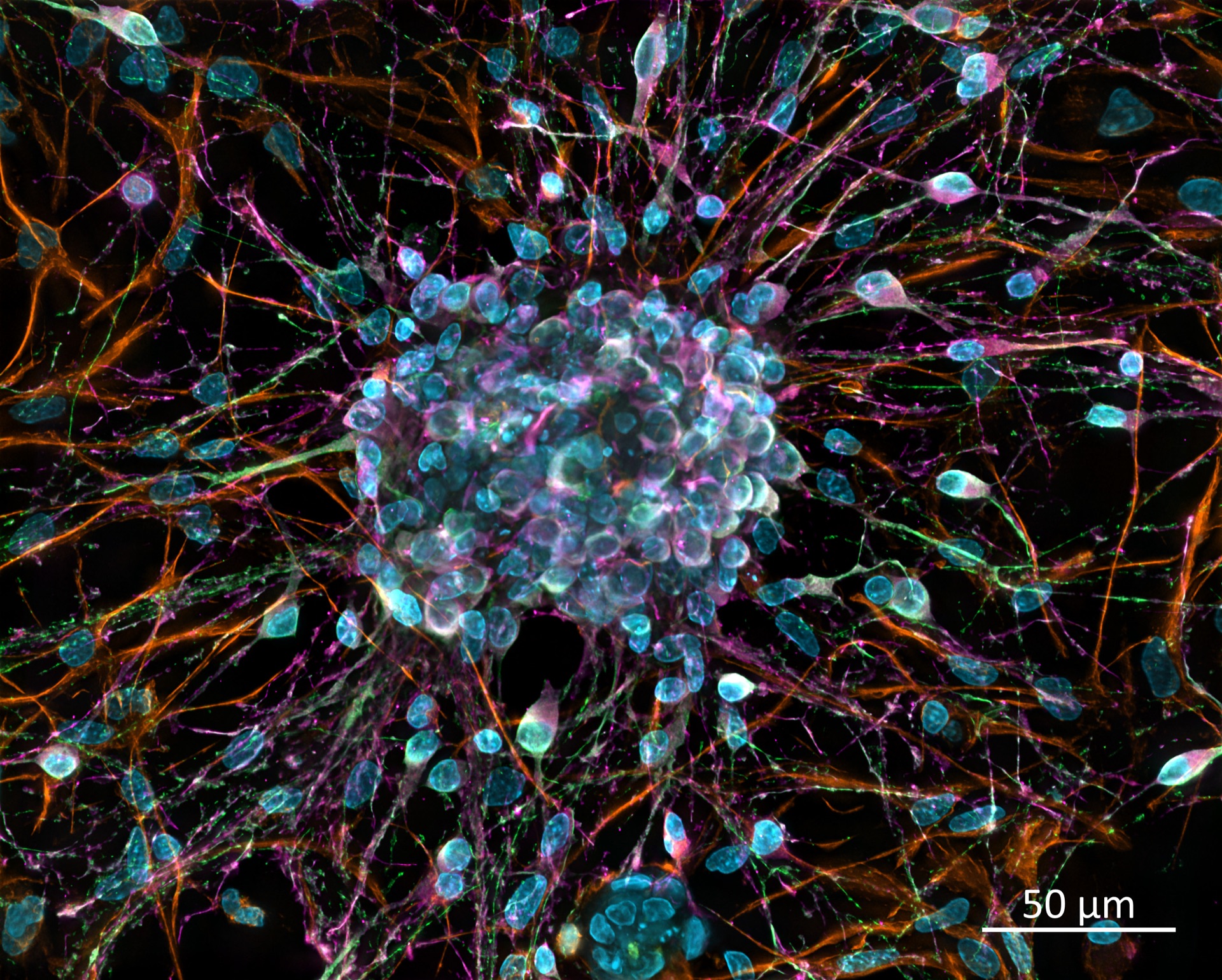
Consciousness is not the brain
The brain is matter; consciousness is its own ontological default. Brain activity is not consciousness itself but the channel through which consciousness engages the physical plane.
The body as vehicle
Consciousness is not “in” the body the way water is in a cup. The body is C's instrument for engaging the physical plane — analogous to the way space is the vehicle for matter. Consciousness operates through matter, not inside it.
The brain as interface
Memory storage occurs in matter — the brain. Consciousness in memory mode engages these stored images. Damage to the brain disrupts C's interface with the physical plane and with stored images, but does not destroy C as such.
Death and post-death persistence
The commitment to post-death persistence is not arbitrary. It follows by reduction from the framework's core premises — Proposition P10:
Consciousness is a default of existence (Axiom 2).
Defaults of existence cannot be destroyed — just as matter cannot be destroyed and space cannot be destroyed in the substance sense, the same holds for consciousness.
Consciousness does not come from matter — no emergence event has ever been observed; matter is its own default and consciousness is its own default.
Identity is intrinsic to consciousness (Axiom 11).
Conclusion: when the body — a specific configuration of matter — dissolves, consciousness is not destroyed. The body was C's vehicle for engaging the physical plane; with the vehicle gone, C no longer engages the physical plane in that form. But C itself, and its identity, persist.
Three points, stated explicitly:
(i) It is a reduction from observed premises. The premises are grounded in direct observation — we have consciousness; matter dissolves but is not destroyed — and in the absence of any counter-observation: no emergence of consciousness from matter has ever been observed. The conclusion follows validly from them.
(ii) The form of post-death engagement is locked information. Which plane C engages after the body dissolves, and in what manner, cannot be read from the physical-plane vantage point. The framework establishes that C persists, and marks the form as the next question.
(iii) Personal identity is preserved. E-NDT rejects every view in which consciousness-as-category survives while individual identity dissolves. Identity is intrinsic to C, not added; if C persists, so does its identity.
Existence as totality
E is everything. There is nothing outside E. This is a strict monism:
E := (Ω, ≺, S, M, C, 𝔖, Pot, …)
Everything that is, and everything that can be, is within E. Potentials not currently actualised are still within E — as potentials. Concepts, thoughts and abstract objects exist as features of C, which is in E. Even imaginary things are within E, at minimum as concepts in C.
Consequences
One cannot think of what is not. Every thought is of something — at minimum, of a concept that exists in C.
Non-existence is unprovable (Axiom 0). The notion of “outside E” is incoherent.
Neither strict eternalism nor strict presentism.
(Ω, ≺)as a structure exists in E, but each C engages only a small portion at a time. Past Δs remain in Ω but are not currently engaged; their images may persist in the memory plane.
Key distinctions
Distinction | In E-NDT |
Existence vs Now | Existence (E) is global and consciousness-independent. Now (N_C) is local to each consciousness, graded, mode-specific and consciousness-dependent. Existence is the totality; Now is what each C makes of E in the moment. |
Order vs time | Order (≺) is primitive, partial, and exists without C — the structural skeleton of differentiations. Time (t_C) is derived: consciousness's numerical mapping of ≺. Order is one; time-assignments are many. |
Change vs measured change | Differentiation (Δ) occurs whether observed or not. Measuring it — assigning numbers, rates, durations — requires consciousness. The change is real; the measurement is constructed. |
Default vs derived | Default: exists without differentiating from any prior state. Derived: exists as a feature of a default. Both are real — the distinction is how each exists, not whether. |
Physical plane vs other planes | Physical: independently default, multi-player by default, embodied. Others: dependently substantial (real because C is real), single-player by default with the multi-player feature locked and possibly hackable, mediated by C directly. |
Category-persistence vs identity-persistence | Under Axiom 11 these collapse into one. Identity is intrinsic to consciousness, so the persistence of consciousness IS the persistence of identity. |
Time does not create | Time is a measurement made by consciousness, with no generative or causal power. “It took N years for X to happen” describes the measurement of order; it does not explain a generative process. Time itself cannot bring anything into being. |
Open frontiers
A framework built on explicit commitments also names its next questions explicitly. These are the seven that E-NDT opens — each is where the work continues, not where it stops.
1 · Mind-body interaction
C is non-physical and interfaces with matter — the brain — for memory storage and physical-plane engagement. How a non-physical C reads physical patterns is the next thing to specify. It is the classic question every dualist position faces, and E-NDT carries it forward as its first frontier.
2 · The empirical hook
E-NDT does not generate predictions that set it against alternatives, because it operates beneath prediction: it is a reading of what the data means, not a rival calculation of the data. Finding an observation that bears on the reading itself is an open line of work.
3 · A formula for the strength of Now
s(N_C) is currently qualitative — strong or weak Now, varying with agency. A numerical formula for s is the next step; it is what would carry the account of Now into quantitative application.
4 · The specifics of post-death engagement
P10 commits the framework to C persisting beyond bodily death. The plane of post-death engagement is locked information from the physical-plane vantage point — the framework establishes the persistence and names the form as open.
5 · The multi-player constraint
The physical plane is multi-player by default and readily accessible. The other planes are single-player by default, but that feature may be “hackable” — shared dreams, telepathy and similar cross-consciousness phenomena could occur as rare exceptions. The framework accommodates both their rare reality and their illusoriness; it requires neither.
6 · The grounding of ≺
≺ is grounded in matter's intrinsic potential-unfolding plus consciousness's interventions. Why matter has the particular potentials it has, and why ≺ takes the specific structure it does in a given case, stand as brute features for now — the deepest open question in the framework.
7 · How consciousnesses are individuated
Under Axiom 11 identity is intrinsic to consciousness. Two configurations remain open, and both are consistent with the axiom:
(a) many primitive consciousnesses, one per personal identity ever; or
(b) one universal consciousness manifesting many perspectives, each with its own intrinsic identity.
Summary table
Concept | Status | Requires C? |
Existence (E) | Absolute ground | No |
Now (N_C) | Consciousness-relative, graded, multi-modal | Yes |
Space (S) | Default | No |
Matter (M) | Default | No |
Consciousness (C) | Default | Self-existent |
Personal identity | Intrinsic to C (Axiom 11) | Yes — it IS C |
Differentiation (Δ) | Primitive event | No |
Order (≺) | Primitive partial order | No |
Time (t_C) | Derived metric | Yes |
Duration | Derived from t_C | Yes |
Before / after | Derived from ≺ | No |
Memory image | Stored in matter, engaged by C in memory mode | Yes, for engagement |
Clock | Materialised tool | Used by C |
Planes (modes) | Potential structures in E | Yes, for engagement |
Free will | Real, bounded by Pot(m) | Yes |
Post-death persistence | Follows by reduction (P10) | Yes |
Deriving natural phenomena
The framework does productive explanatory work: from its own primitives, axioms and definitions it derives the structure of eight known natural phenomena. Each derivation below uses only E-NDT's terms. They are not comparisons with other frameworks — they are demonstrations of what E-NDT generates from its starting commitments.
Derivation 1 — Relativity of simultaneity
Phenomenon. Two consciousnesses can disagree about whether two events happened “at the same time” — and neither is wrong.
Primitives used: Ω, the partial order ≺, the time-assignment t_C, and incomparability ∥.
Lemma 1. If Δ_a ≺ Δ_b, every valid t_C must satisfy t_C(Δ_a) < t_C(Δ_b) — directly, by the order-preservation constraint in Axiom 7. So every consciousness measures Δ_a as happening before Δ_b. The order is absolute.
Lemma 2. If Δ_a ∥ Δ_b, no order constraint applies between them. Multiple valid t_C exist: one assigning t_C(Δ_a) < t_C(Δ_b), another the reverse, a third equality. All three respect ≺. So the temporal order between them is consciousness-dependent.
Theorem. For any pair Δ_a, Δ_b ∈ Ω:
Comparable in ≺ → absolute temporal order.
Incomparable in ≺ → consciousness-dependent order.
What this resolves. Frame-dependence of simultaneity falls straight out of the primitive partial-order structure. No spacetime metric, speed of light or Lorentz machinery is required — the phenomenon is structural.

Derivation 2 — The arrow of time and irreversibility
Phenomenon. Time appears to flow forward. Some processes — broken eggs, mixed paint — don't reverse spontaneously. The past feels fixed and the future feels open.
Primitives used: ≺ (asymmetric by definition), Axiom 9 (immutability of ≺), Pot(m), the memory plane M_p storing images of past Δs, and Ω(N_C) — the differentiations C has access to at N_C.
Part 1. ≺ is structurally asymmetric: if Δ_a ≺ Δ_b then not Δ_b ≺ Δ_a. Directionality is intrinsic to the primitive order.
Part 2. ≺ is immutable (Axiom 9). New Δs are added to Ω; existing Δs cannot be removed or reordered. So |Ω| is monotonically increasing.
Part 3. Reversibility of matter is not reversibility of Ω. Even when matter returns to a prior state — water → ice → water — that creates three Δs, not zero. The original Δ persists in Ω at its fixed position in ≺. A new Δ is added; nothing is removed.

Part 4. For matter m undergoing s → s', reversibility depends on whether s is still in Pot(m) after the transition. Burning paper: “intact paper” ∉ Pot(ash) — the transition itself eliminated the prior potential. Freezing water: “water” ∈ Pot(ice) — reversibility persists.
Part 5. From C's standpoint N_C, differentiations divide into:
Past — actualised Δs, stored as images in
M_p.Now — currently engaged Δs.
Future — only
Pot(m), not yet actualised.
Theorem. The arrow of time emerges from:
the asymmetry of ≺;
the immutability of ≺ (Axiom 9);
the monotonic growth of Ω;
M_pstoring only actualised Δs;the asymmetry between past (in Ω) and future (in
Pot(m)).
What this resolves:
Why we remember the past but not the future.
Why “undoing” requires new actions — new Δs.
Why broken things stay broken: their Pot has lost the prior state.
Why time feels like it flows forward.
Why the past is fixed and the future open.
No appeal to entropy or thermodynamics is required — the arrow is built into the framework's primitives.
Derivation 3 — Superposition and the observer effect
Phenomenon. Physical systems behave as though in multiple states at once before measurement; measurement yields a single outcome; outcomes appear probabilistic; and observation seems to affect the system.
Primitives used: Pot(m), Δ as state transition, and Axiom 10 (consciousness as agent, able to actualise potentials).
Introduced structure: w : Pot(m) → [0, 1] with Σ w(s) = 1 — the “natural tendency” weighting on potential states under default unfolding.
Part 1. Pot(m) is naturally a multi-element set; matter inherently has multiple potential states. Before any actualisation, matter does not “have” a single specific state — what it has is Pot(m). This is structurally identical to superposition.
Part 2. Every Δ is an actualisation event: one specific s ∈ Pot(m) is selected and becomes the actual state. That is simply what differentiation is in the framework — no special “collapse” mechanism is needed.
Part 3. There are two selection modes:
Mode A — default unfolding: selection follows w, so
P(actualise s) = w(s).Mode B — conscious selection (Axiom 10): C can select any
s ∈ Pot(m)regardless of w, bounded byPot(m)— it cannot actualise what is not a potential.
Part 4. Under Mode A with non-trivial w, outcomes are probabilistic from any external standpoint — exactly the form of quantum probability.
Part 5. Under Mode B, consciousness genuinely affects which state actualises. The observer effect is not mysterious — it follows from Axiom 10.
Theorem. Superposition (multi-element Pot) is the default state of matter. Collapse (actualisation of a single state) is what happens at every Δ. Probability follows w under default unfolding. Conscious selection can deviate from w within Pot(m).
What this resolves:
Why systems appear to be in multiple states before measurement.
Why measurement yields one outcome.
Why outcomes appear probabilistic.
Why consciousness and observation affect physics.
Why the measurement problem puzzles standard frameworks: they lack consciousness as a primitive. E-NDT has it, so the puzzle dissolves.
Superposition and collapse are reframed as ordinary features of matter and differentiation, not special phenomena.
Derivation 4 — Conservation of matter and energy
Phenomenon. Matter is neither created nor destroyed, only transformed. Energy persists across change — it changes form but does not disappear. Every transformation preserves the underlying “stuff”.
Primitives used: Axiom 2 (matter as default), Axiom 4 (differentiations as state transitions), and the reductive logic behind P10 (defaults are indestructible).
Part 1. By Axiom 2 matter is a default of existence; by the reductive logic of P10, defaults cannot be destroyed. So matter cannot be destroyed.
Part 2. By Axiom 4 every Δ is a state transition s → s' for some matter m. It changes m's configuration; it neither creates nor destroys m.
Part 3 — conservation of matter. For any sequence Δ_1, …, Δ_n, the total matter is unchanged before and after.
Part 4. Energy, in E-NDT terms, is a property of matter's state. A state s ∈ 𝔖 specifies a configuration, and that configuration has the features physics calls energy.
Part 5 — conservation of energy. Since energy is a property of matter's state, and matter is conserved across Δs, energy is conserved — redistributed across the matter involved, never created or destroyed in total.
Theorem. Conservation of matter and energy follows from:
matter being an indestructible default (Axiom 2);
differentiations being transitions, not creations or destructions (Axiom 4);
energy being a feature of matter's state, and so inheriting matter's conservation.
What this resolves:
Why matter is conserved — its default status.
Why energy is conserved — it is a property of matter, which is conserved.
Why “creation from nothing” is incoherent — non-existence is not a “from” (Axiom 0).
Why mass-energy equivalence makes sense — both are aspects of matter, not separate substances.
Conservation of matter and energy, and the persistence of consciousness after death, follow from the same principle: defaults are indestructible. One feature unifies the physical conservation laws and the persistence of consciousness.
Derivation 5 — Continuity of personal identity
Phenomenon. A person feels continuous across years despite cell turnover, fading memories and changing beliefs. Amnesia does not destroy who they are; sleep does not create a new self each morning; profound personality change leaves identity intact.
Primitives used: Axiom 11 (identity intrinsic to consciousness), Axiom 2 (consciousness as indestructible default), the memory plane M_p, and C as a substantial primitive.
Part 1 — identity is not constituted by memory. By Axiom 11, I(C) is intrinsic to C. Memories are contents accessed via M_p, not features that constitute identity. Memory loss is not identity loss.
Part 2 — identity is not constituted by the body. The body is C's vehicle for the physical plane, and the matter composing it changes constantly. If identity were the matter, you would be a different person every few years. I(C) persists because it is intrinsic to C, not to the vehicle.
Part 3 — identity is not constituted by beliefs, values or personality. These are features of how C engages the various planes. They change; I(C) does not.
Part 4 — what I(C) is. By Axiom 11, I(C) is the intrinsic thisness of being this particular C. It persists as long as C exists — and since C is a default and defaults are indestructible, I(C) is unconditional.
Part 5 — where the feeling of continuity comes from:
(a) C is literally the same C across time.
(b)
M_pprovides access to images of past Δs.
When (b) is intact, continuity feels strong. When it is disrupted, continuity feels weak — but the underlying fact (a) holds.
Theorem. Personal identity I(C) persists across:
changes in physical matter — body and brain;
changes in memory access — amnesia;
changes in beliefs, values and personality;
gaps in conscious engagement — sleep, anaesthesia.
What this resolves:
Why you feel continuous across years.
Why cell turnover does not make a new person.
Why amnesia is disorienting but not identity-destroying.
Why sleep does not create a new “you” each morning.
Why people who change drastically are still themselves.
Why Ship of Theseus puzzles do not apply to persons.
Fact and feeling, separated. E-NDT cleanly separates the fact of identity continuity (intrinsic to C) from the experience of it (which requires memory-plane access). That separation dissolves the classic puzzles of personal identity.
Derivation 6 — Radioactive decay statistics
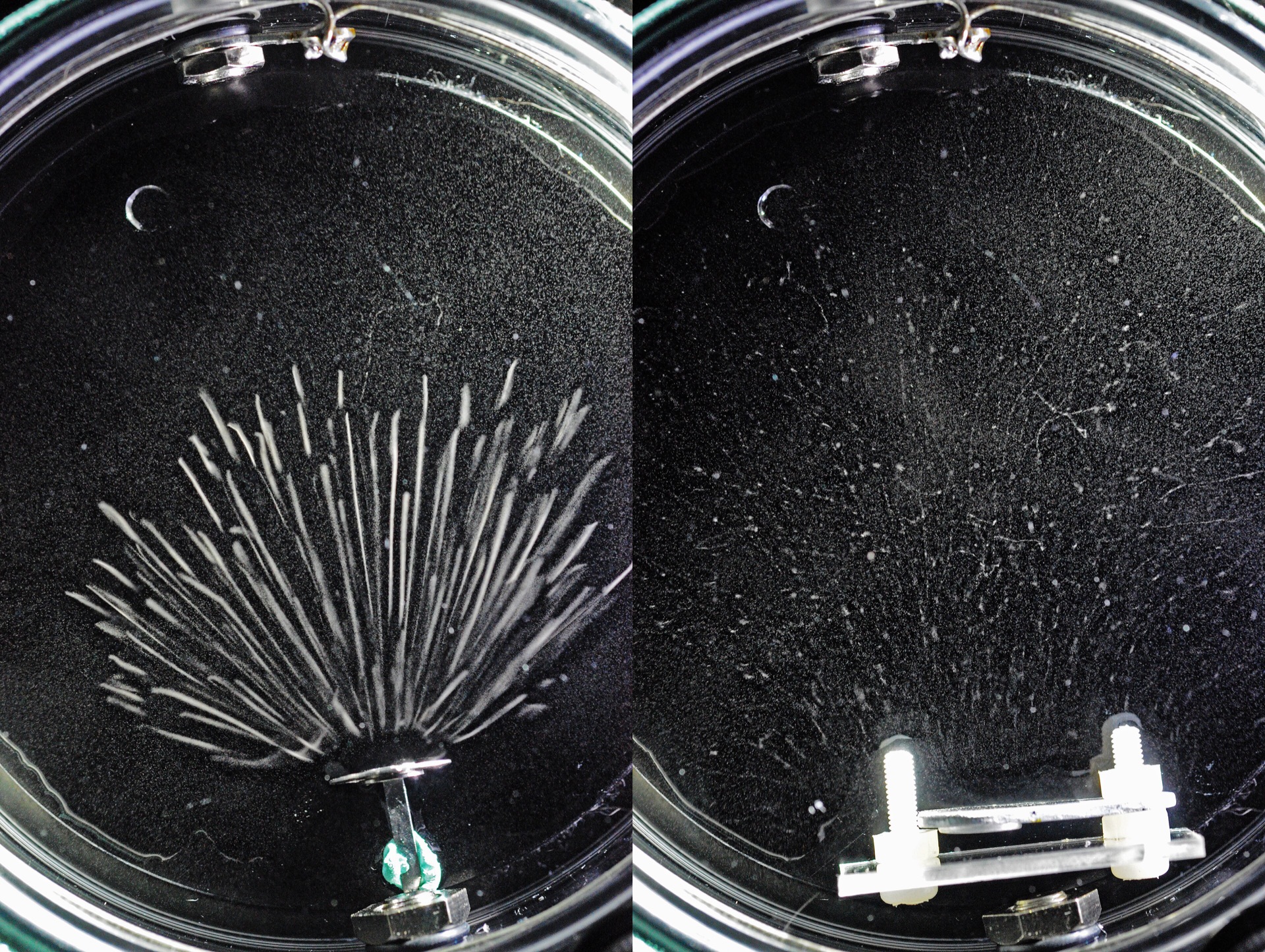
Phenomenon. Radioactive nuclei decay following the exponential law N(t) = N₀ · e^(−λt). Individual decays are unpredictable, yet population statistics are precise — memoryless and Poisson-distributed.
Primitives used: Pot(m) = {S_u, S_d} for a nucleus m (undecayed, decayed), the weighting w, Δ as actualisation, and the time-assignment t_C.
The framework's specific contribution. Pot(m) and w are intrinsic to matter and do not change while m remains in S_u. That intrinsic constancy is the metaphysical explanation of memorylessness: the nucleus has no memory of its waiting time, because Pot does not store history.
Part 1 — memorylessness. For a nucleus in S_u, every check interval δt meets the same Pot(m) and the same w. So:
P(stays in S_u over δt | in S_u for any duration) = p(δt)
— independent of prior waiting time.
Part 2 — exponential law for a single nucleus. For independent successive intervals, P(undecayed at n·δt) = p(δt)^n. With p(δt) = 1 − λδt + O(δt²) for a constant λ set by w and the natural rate of actualisation opportunities:
P(undecayed at t) = lim_{δt→0} (1 − λδt)^(t/δt) = e^(−λt)
Part 3 — population law. For N₀ independent nuclei:
E[N(t)] = N₀ · e^(−λt) half-life t_½ = ln(2)/λ
Part 4 — waiting-time distribution.
f(t) = −d/dt [e^(−λt)] = λe^(−λt)
Part 5 — Poisson statistics. From independence, memorylessness and constant rate:
P(K decays in time T) = (μ^K · e^(−μ)) / K!, where μ = λN₀T
Theorem. From E-NDT's primitives alone — the intrinsic constancy of Pot(m) and w for nuclei in S_u — the framework derives:
memorylessness, built into the framework;
the exponential decay law
N(t) = N₀·e^(−λt);the half-life formula
t_½ = ln(2)/λ;the exponential waiting-time distribution
f(t) = λe^(−λt);Poisson statistics for decay counts.
What this resolves:
Why radioactive decay follows an exponential law.
Why decay is memoryless — nuclei do not age.
Why decay counts are Poisson-distributed.
Why population statistics are precise while individual events are unpredictable.
This is the framework's first fully quantitative derivation — not structural relabelling, but the specific functional forms of physical laws derived from primitives.
Where physics takes over: the specific λ for a particular isotope. That value comes from nuclear-physics-specific structure on Pot, which the framework hands to physics.
Derivation 7 — The double-slit experiment
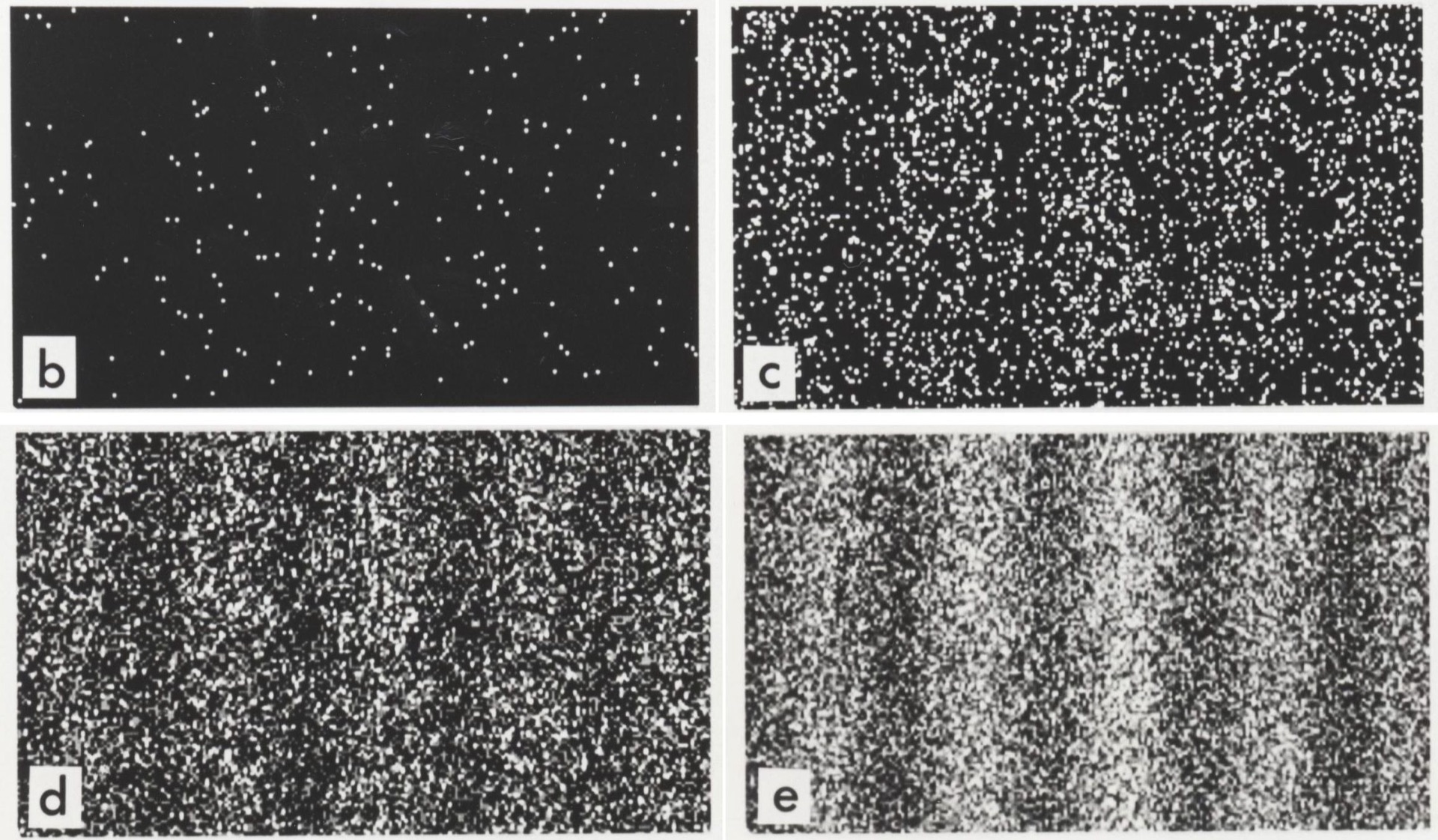
Phenomenon. A single electron (or photon) sent through two slits produces an interference pattern over many trials — behaving “as if it went through both slits”. Measure which slit it passes through, and the interference disappears into a classical two-stripe pattern.
Primitives used: the electron m; Pot(m), including multi-path and interference-related states; Δ_slit (a differentiation at the slits, if measured); Δ_screen (on hitting the detector); Axiom 4; Axiom 10.
Part 1 — multi-element Pot without slit measurement. Pot(m) ⊇ {S_A, S_B, interference-related states, …}, where S_A is “passed through slit A” and S_B “passed through slit B”. Interference-related states are potentials representing the electron in superposed-path configurations. The framework permits them because Pot is intrinsic to matter and need not consist only of classical either-or alternatives.
Part 2 — no Δ at the slits, so Pot persists. If no measurement device interacts with m at the slits, no Δ_slit occurs and Pot(m) stays multi-element all the way to the screen. (Axiom 4: Pot changes only at Δs.)
Part 3 — Δ at the screen actualises from the full Pot. At the screen Δ_screen occurs, selecting from the full multi-element Pot, interference-related potentials included. The detection distribution D(position) inherits the structure of the full Pot — bright and dark fringes.
Part 4 — a Δ at the slits simplifies Pot. If a device interacts at the slits, Δ_slit occurs there and selects one specific state — S_A or S_B. Afterwards Pot(m)_new contains single-path-rooted potentials only; the interference-related potentials are no longer in the relevant Pot.
Part 5 — screen Δ after slit measurement gives the classical pattern. Δ_screen now selects from the simplified single-path Pot. D(position) is the sum of two classical single-slit patterns — no interference.
Theorem. For an electron whose Pot(m) includes interference-related potentials:
No intermediate Δ at the slits → the screen Δ actualises from the full Pot → interference pattern.
An intermediate Δ at the slits → the screen Δ actualises from the simplified Pot → classical pattern.
The presence or absence of intermediate Δs determines the structure of Pot available at later Δs. That is the structural reason for observation-dependent behaviour.
What this resolves:
Why interference happens at all — multi-element Pot persists through to the screen.
Why measurement destroys interference — an intermediate Δ simplifies Pot.
Why the electron “acts like a wave or a particle depending on whether you look” — it depends on whether Δs occur at the slits.
Why wave-particle duality dissolves — matter simply has an intrinsic Pot that can include both classical and interference-related states.
Where physics takes over: the specific fringe spacing and intensity ratios, which come from wave-mechanical structure on Pot.
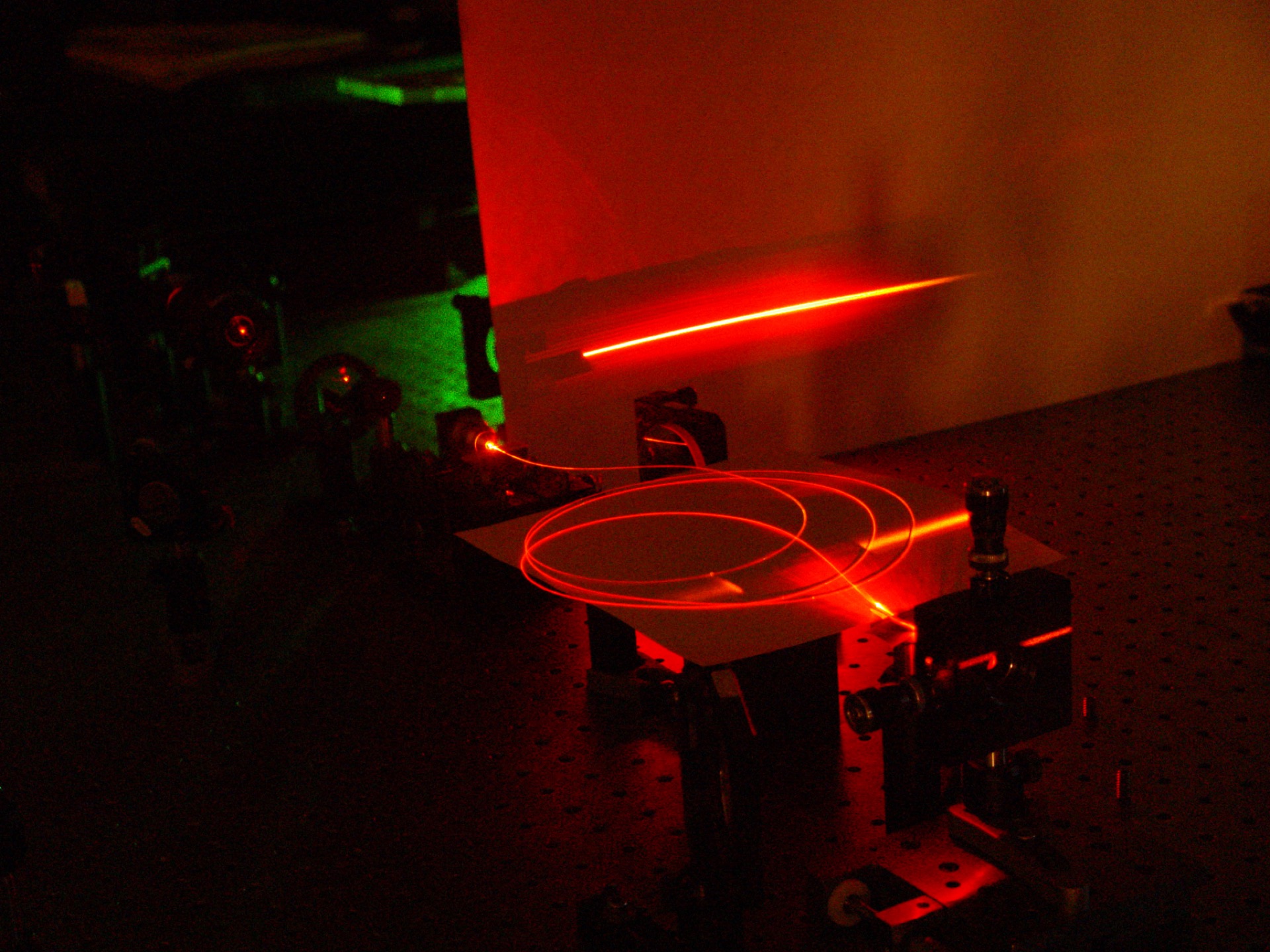
Derivation 8 — EPR and Bell entanglement
Phenomenon. Two particles created together — entangled — show perfectly correlated measurement results even when measured far apart. The correlation appears instantaneous. Bell's theorem shows local hidden variables cannot reproduce it. The standard framing: “spooky action at a distance”.
Primitives used: particles m_1, m_2; the joint potential space Pot(m_1, m_2); the factored space Pot(m_1) × Pot(m_2); measurement-actualisations Δ_1, Δ_2; Axiom 9; incomparability ∥.
The framework's specific contribution. Joint matter can have joint Pot. The framework does not require Pot(m_1, m_2) = Pot(m_1) × Pot(m_2). For entangled systems the joint Pot is not factorable into independent component Pots — a structural feature of the framework, not an add-on.
Part 1 — entangled particles share a joint Pot. When m_1 and m_2 are created entangled, Pot(m_1, m_2) ≠ Pot(m_1) × Pot(m_2). The joint Pot contains correlated potentials: if m_1 is actualised to s, m_2 must be in the correlated state s'.
Part 2 — spatial separation does not factor Pot. Pot changes only at Δs (Axiom 4). Spatial separation is not a Δ. So the joint Pot persists however far apart the particles are.
Part 3 — measuring one actualises the joint Pot. Measuring m_1 is Δ_1. Because the relevant Pot is joint, this Δ actualises the joint configuration: both particles acquire determinate states, correlated as Pot(m_1, m_2) specifies.
Part 4 — no signal is needed. The correlation requires no signal between the particles, because:
(a) their states were always jointly correlated in
Pot(m_1, m_2);(b) the actualisation simply resolves the joint Pot;
(c) no information has to travel — the correlation was in the joint Pot from creation.
The “action at a distance” framing dissolves: there is no real separation to begin with — the particles were always part of one joint potential structure.
Part 5 — consistency with Bell's theorem. Bell's theorem rules out local hidden variables, and E-NDT does not posit local hidden variables. The joint Pot is intrinsically nonlocal — not reducible to separate local properties of m_1 and m_2. That is a feature of the framework, not a violation of Bell.
Part 6 — consistency with Axiom 9. Δ_1 and Δ_2 each have positions in ≺, and may be comparable or incomparable:
If
Δ_1 ∥ Δ_2(spacelike separated), no order is forced — different consciousnesses may order them differently (P6) — yet the joint actualisation still resolves both consistently.If
Δ_1 ≺ Δ_2or the reverse, the joint Pot constrains both at the earlier Δ.
In neither case is ≺ modified. The correlation comes from the joint Pot, not from changing the order.
Theorem. For two particles whose joint Pot(m_1, m_2) does not factor:
the joint Pot persists despite spatial separation;
measurement-actualisation on either particle resolves the joint Pot;
the correlation between outcomes is built into the joint Pot from creation;
no signal travels between the particles — the correlation is structural, not communicative;
Axiom 9, the immutability of ≺, is preserved.
What this resolves:
Why entanglement correlations exist — joint Pot.
Why no signal is needed — the correlation is structural.
Why local hidden variables fail — Pot is intrinsically nonlocal.
Why separation does not decorrelate — separation is not a Δ.
Why “spooky action at a distance” is misleading — there is no action; the correlation predates the measurement.
Where physics takes over: the specific correlation function (for example cos²(θ/2) for spin) and the specific size of the Bell-inequality violation, which come from quantum-mechanical structure on the joint Pot.
The deeper significance. In standard physics EPR is puzzling because it seems to demand faster-than-light signalling, local hidden variables, or abandoning realism. E-NDT dissolves the puzzle by rejecting the assumption that spatial separation implies factorisation of Pot. The framework permits a joint Pot that does not factor — and the correlations follow naturally.
Eight phenomena, one set of primitives
Phenomenon | Derived from |
1. Relativity of simultaneity | The partial order ≺ — incomparable pairs yield observer-dependent temporal ordering. |
2. Arrow of time / irreversibility | Asymmetry and immutability of ≺; monotonic growth of Ω; M_p storing only past Δs. |
3. Superposition and the observer effect | Pot(m) as a primitive multi-element set; actualisation as a standard Δ; consciousness as selector (Axiom 10). |
4. Conservation of matter and energy | Matter as an indestructible default (Axiom 2); Δs as transitions (Axiom 4). |
5. Continuity of personal identity | Identity intrinsic to C (Axiom 11); C as an indestructible default (Axiom 2). |
6. Radioactive decay statistics — fully quantitative | Intrinsic constancy of Pot(m) and w for stable matter. Yields N(t) = N₀e^(−λt), Poisson statistics, memorylessness. |
7. Double-slit interference | Multi-element Pot(m) with interference-related states; Pot persists between Δs; intermediate Δs simplify Pot. |
8. EPR / Bell entanglement | Joint Pot(m_1, m_2) that does not factor; persists across separation; actualises jointly at any single Δ. |
Across all eight, the framework generates structurally meaningful results from its primitives alone — without physics-specific assumptions or a separate principle for each phenomenon. The same foundational features — defaults, ≺, Pot, joint Pot, Axiom 11 — do the work across very different domains.
Quantitative and structural results
Derivation 6 is fully quantitative: it derives the specific functional forms — the exponential law and the Poisson distribution — from primitives.
The others are structural: they explain why each phenomenon has the form it has. The specific numbers — fringe spacing, particular correlation functions — are where physics supplies additional structure on Pot. The framework's central contribution is the structural explanation itself: diverse phenomena from a small set of primitives.
Closing

E-NDT is a coherent metaphysical account of the structure of existence, time, change, presence, identity and consciousness. Physicalism, block-universe eternalism and process metaphysics read the same phenomena differently. My conclusion, from observation, is that E-NDT reads them from the position closest to what is actually observed — and that from there, more of the picture holds together.
What E-NDT offers:
A specific set of explicit commitments.
A coherent ontology of defaults and derived entities.
A symmetric criterion for what counts as a default — no observed emergence from a prior state.
An account of Now as consciousness-relative and graded.
A theory of differentiation as the expression of potential.
A view of time as constructed measurement.
A model of consciousness as default and active.
A treatment of planes as engageable structures.
A consistent handling of memory, dreams and imagination.
Identity intrinsic to consciousness (Axiom 11).
Post-death persistence by reduction (Proposition P10).
Where the work continues:
Observations that bear on the reading itself, beyond the data it already accepts.
The mechanism of mind-body interaction.
The form of post-death engagement.
A quantitative formalism for the strength of Now.
Resolving universal versus many consciousnesses.
It stands as a serious metaphysical position, to be judged on coherence, phenomenological fit, the parsimony of its commitments, and its explanatory scope. Its claim to seriousness rests on four things:
A symmetric observational criterion for primitives.
Explicit — not smuggled — commitments.
Internal consistency of its derivations.
Direct grounding in lived experience.
Take what IS as it is. Matter, space and consciousness have never been seen to come from anything prior — so treat all three the same way, and follow the consequences wherever they lead.
Image credits
Images from Wikimedia Commons, used under the licences listed. The sand-glasses were cropped; no other image was altered beyond resizing.
Cover — “Cosmic Cliffs”, Carina Nebula: NASA, ESA, CSA, STScI (James Webb Space Telescope). Public domain.
Hubble Ultra Deep Field: NASA and ESA; edit by Noodle snacks. Public domain.
Human looking at the stars during the Perseids: Giles Laurent. CC BY-SA 4.0.
Sand-glasses, Ekeby church: Bene Riobó. CC BY-SA 4.0 (cropped).
Longines pocket watch, clockwork visible: Franz van Duns. CC BY-SA 4.0.
Ingelen Geographic tube radio, tuning dial: Ricardo Reis. CC BY-SA 2.0.
Rat primary cortical neuron culture: ZEISS Microscopy. CC BY 2.0.
Paper ash, Rostov-on-Don: Vyacheslav Argenberg. CC BY 4.0.
“From water to water”: Alosh Bennett. CC BY 2.0.
Particle tracks in an expansion cloud chamber: Kebuk awan. CC BY-SA 4.0.
Double-slit experiment results: Dr. Tonomura and Belsazar. CC BY-SA 3.0.
NIST efficient two-photon source: National Institute of Standards and Technology. Public domain.
Butterfly Nebula, NGC 6302: NASA, ESA and the Hubble SM4 ERO Team. Public domain.